
指南8 分鐘閱讀
The Event Planning Checklist: Every Task From 12 Weeks Out to Event Day
A complete event planning checklist organized by timeline — 12 weeks out, 8 weeks, 4 weeks, event week, and event day. Print it, adapt it, ship your event.
文 Mara EllisonField operations
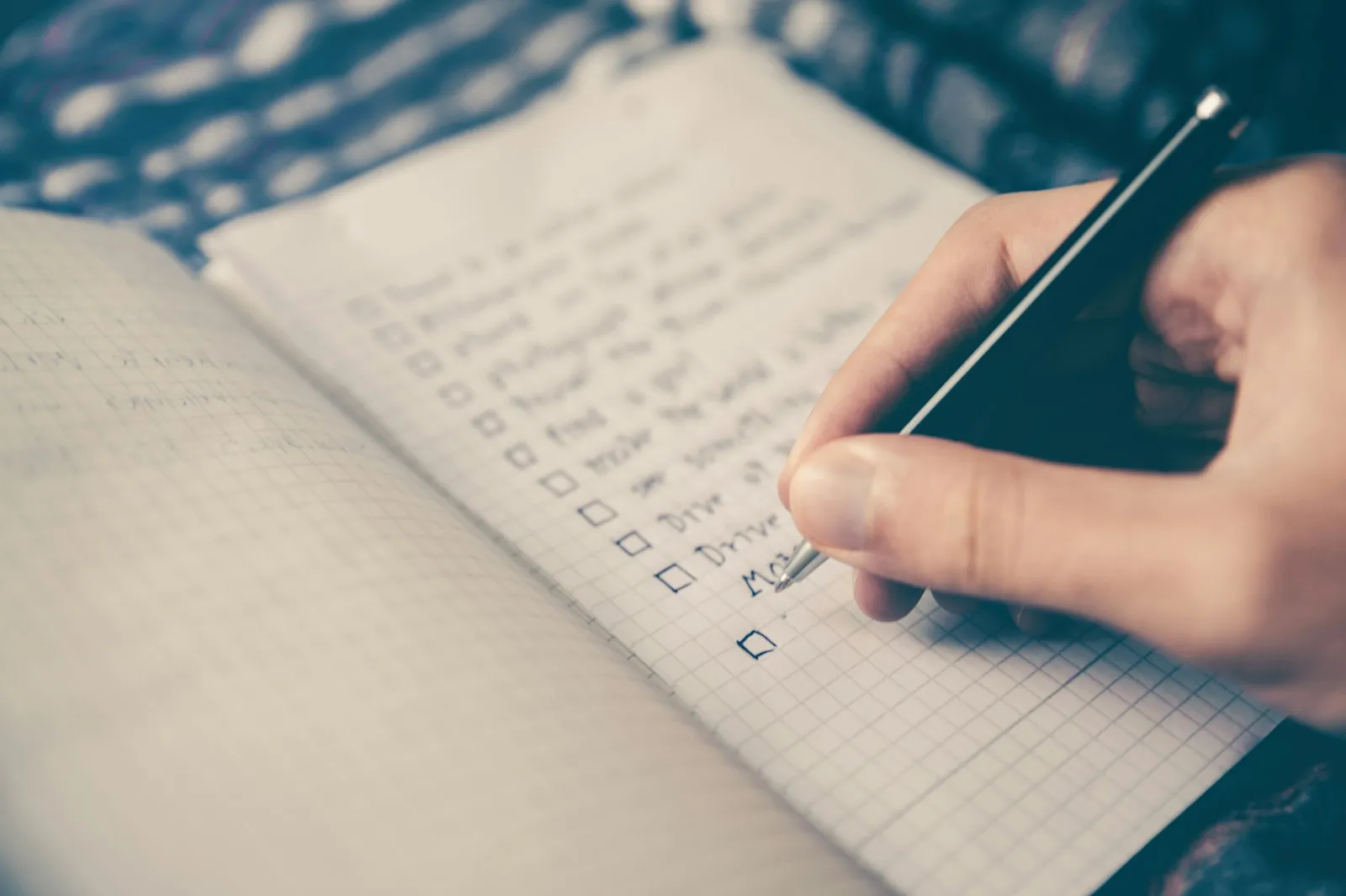
Every experienced organizer carries an event planning checklist in their head. The problem is that heads do not scale: the moment two people plan the same event, undocumented checklists collide. This is the written version — organized by timeline, so you always know what should already be done and what is due next.
Adapt the horizons to your format. A 500-person conference needs the full 12 weeks; a 40-person workshop can compress the same sequence into six.
12 weeks out: foundations
- Write down the goal in numbers — registrations, revenue, leads, or satisfaction score. Everything below serves this line.
- Set the budget, including a 10–15% contingency. Get it approved in writing.
- Lock the date. Check for competing events, holidays, and your audience’s busy seasons.
- Shortlist and book the venue. Confirm capacity, load-in times, Wi-Fi, power at check-in positions, and cancellation terms.
- Confirm anchor speakers or headline content. The agenda does not need to be complete, but the reason to attend does.
- Choose your ticketing and registration stack. Migrating platforms mid-campaign is expensive; decide now. Our event ticketing system comparison covers how to evaluate options. If you sell more than one pass, set multiple ticket types before the page goes live.
8 weeks out: build the machine
- Publish the event page with date, venue, provisional agenda, and speaker names.
- Open registration. Keep the form minimal — every extra field costs completions.
- Set up ticket tiers (early-bird, standard, group) with enforced deadlines.
- Draft the email sequence: confirmation, reminder at one week, practical details at two days, day-of logistics.
- Start promotion wave one — announcement plus early-bird. Give speakers and partners ready-made copy and images to share.
- Book catering, AV, and photography. Get every quote in writing.
- Open a risk register: speaker cancellation, low registrations, venue issues. One owner and one fallback per risk.
4 weeks out: pressure-test
- Check registration pace against target. If you are behind, act now — a partner push or a targeted campaign works at four weeks and does not at four days.
- Finalize the agenda and publish it. Announce session capacities and any sign-up-required sessions.
- Confirm all suppliers in writing: delivery windows, contact names, mobile numbers.
- Order signage, badges, and printed materials. Late print orders are a classic panic purchase.
- Recruit and schedule onsite staff and volunteers. Write role descriptions — “help at check-in” is not a role.
- Send the one-week reminder draft for review so it is ready to ship, not written the night before.
Event week: rehearse
- Run a full walkthrough at the venue with the run-of-show: registration flow, badge printing positions, signage placement, AV checks in every room. If you do not yet have that document, start with how to write an event run-of-show.
- Brief the whole team against the run-of-show. Everyone knows their station, their shift, and who to escalate to.
- Test check-in hardware with real data: scan actual QR passes, print actual badges. A check-in system tested for the first time on event morning is not tested.
- Reconfirm speakers — travel, arrival time, slides received, AV requirements.
- Send the practical-details email: address, doors-open time, parking or transit, what to bring.
- Prepare the problem desk: name changes, payment disputes, walk-in registrations. A separate lane keeps the main queue moving.
Event day: work the exceptions
- Arrive before the venue staff think you need to. Walk the space; fix signage before doors, not after.
- Open check-in early and staff for the arrival peak — the first 45 minutes usually see 60% of attendees.
- Keep a live command channel (radio or group chat) with every station represented.
- Track attendance in real time. Session capacity issues show up in the data before they show up as hallway crowds.
- Capture content as you go: photos, quotes, attendance numbers. You will want them for follow-up within 48 hours.
After the event: close the loop
- Send the thank-you email within 48 hours, with slides or recordings.
- Fire the survey immediately. Response rates halve with every day of delay.
- Reconcile the budget against actuals while invoices are fresh.
- Hold a retrospective and write down three changes for next time.
- Report results against the goal from week 12. That single comparison is what turns an event into an improving program — which is the point of event project management as a discipline.
Frequently asked questions
What should be on an event planning checklist?
Five timeline blocks: foundations (goal, budget, date, venue, speakers), build (registration, ticketing, email sequence, suppliers), pressure-test (pace check, agenda, staffing, print orders), rehearsal (walkthrough, briefing, hardware tests), and follow-up (thank-you, survey, reconciliation, retrospective). The tasks matter less than the sequencing — most event failures are correct tasks done too late.
How do I make an event planning checklist for a small event?
Keep the same sequence but compress the horizons: 6 weeks instead of 12, and merge the 8-week and 4-week blocks. Do not delete the rehearsal step — testing check-in and briefing staff matters at 40 attendees as much as at 4,000, because small events have no slack staff to absorb surprises.
What is the first thing to do when planning an event?
Write down the measurable goal, then set the budget. Booking a venue before you know what success means and what you can spend is how events end up shaped by their room instead of their purpose. See our full guide on how to plan a successful event.