
Guías9 min de lectura
How to Plan a Successful Event: A Step-by-Step Guide
Learn how to plan a successful event from goal-setting to post-event follow-up. A practical, field-tested framework used by professional event teams.
Por Mara EllisonField operations

If you want to know how to plan a successful event, start with an uncomfortable truth: most events fail before the doors open. The failure is rarely dramatic — it is a goal nobody wrote down, a budget approved without a contingency line, or a registration flow that quietly loses a third of the people who intended to come.
This guide walks through the process we see working across conferences, workshops, and corporate events: define success, secure the foundations, build the attendee journey, and close the loop afterwards. Use it as the spine of your plan, and adapt the details to your format.
Step 1: Define what success means — in numbers
“A great event” is not a goal. Before you book anything, write down two or three measurable outcomes:
- Attendance: 400 registrations, 300 checked in (a 75% show rate).
- Commercial: 50 qualified leads for sales, or €40,000 in ticket revenue.
- Experience: a post-event survey score of 4.5/5 or higher.
Every later decision — venue, pricing, agenda length — gets easier when you can ask “does this move one of the three numbers?” It also gives you an honest way to evaluate the event afterwards, instead of relying on how the room felt at 4 p.m.
Step 2: Build the budget with a contingency line
List every cost category before negotiating any single one: venue, catering, AV and production, staffing, marketing, speaker travel, signage, and software. Then add 10–15% as contingency. Events that skip the contingency line do not spend less; they spend the same amount in panicked, poorly negotiated purchases during the final two weeks.
Match the budget against your revenue model early. If tickets fund the event, work backwards: target revenue ÷ realistic ticket price = registrations you must generate. That number tells you whether your marketing plan is sized correctly months before it becomes a problem.
Step 3: Lock the date and venue early
Date and venue constrain everything else, so settle them first:
- Check the calendar for competing industry events, school holidays, and major sporting fixtures that drain your audience.
- Visit the venue with your run-of-show in mind: where does the registration queue form? Where do badge printers sit? Is there reliable Wi-Fi and power at the check-in desks?
- Negotiate the details that bite later — load-in times, overtime rates, AV exclusivity clauses, and cancellation terms.
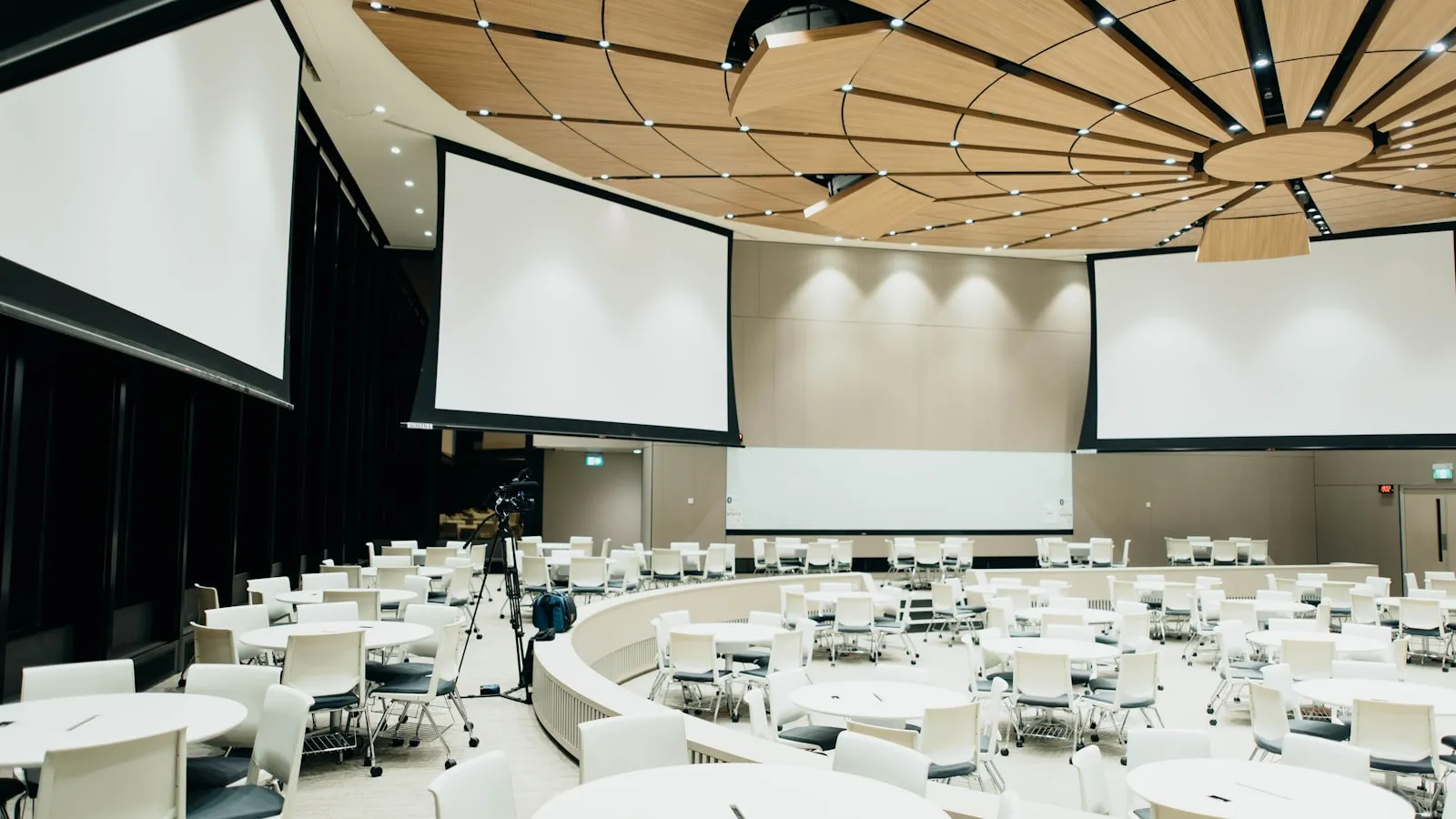
A beautiful venue with a single entrance and no space for a check-in line will undo months of good planning in the first thirty minutes of your event.
Step 4: Design the program before you sell it
Attendees register for a program, not a date. Draft the agenda — even a provisional one — before registration opens. Confirm your anchor speakers first, then build sessions around them. Keep formats honest: a 6-hour wall of talks loses people after lunch; breaks, workshops, and networking blocks are what attendees actually remember.
If you run parallel tracks, decide session capacity rules now. Which rooms are first-come, which require sign-up, and what happens when a room fills? Answering this in week one is a planning task; answering it on event day is a crisis.
Step 5: Open registration with as little friction as possible
Your registration flow is the first experience attendees have of the event. Treat it as part of the product:
- Keep the form short — every field you add costs completions. Collect nice-to-have data later.
- Offer tiered pricing (early-bird, standard, group) with real deadlines that you actually enforce.
- Send a confirmation email immediately, with the date, venue, and a calendar file.
Registration is also where your data model starts. Decide up front what a “registration” means — one person, one ticket, one pass — and how transfers and refunds work. We wrote in more depth about increasing event registration, increasing registrant conversions, and how to sell tickets to an event if attendance is your primary success metric.
Step 6: Promote in waves, not a single blast
A single announcement email is not a marketing plan. Structure promotion in waves tied to real milestones: speakers announced, agenda published, early-bird deadline, final week. Each wave gives your audience — and your partners and speakers, who share more than any paid channel — a fresh reason to talk about the event.
Track registrations per channel weekly. If you are four weeks out and at 40% of target, you want to know that week, not at the venue.
Step 7: Write the run-of-show and brief the team
The run-of-show is a minute-by-minute schedule of event day: who unlocks the venue, when check-in opens, when each session starts, who holds the microphone for Q&A, and who makes the call when a speaker cancels at 8 a.m. We wrote a dedicated guide on how to write an event run-of-show if that document is the gap.
Brief every staff member and volunteer against it. The test of a good run-of-show is simple: could someone who joined the team yesterday use it to answer 90% of questions on the day? On event day itself, your job is exceptions — everything routine should already be decided.
Step 8: Get check-in right — it sets the tone
The first ten minutes on site color the attendee’s memory of the entire event. Plan check-in with the same rigor as the program: enough desks for your arrival peak, a separate lane for problems (name changes, payments, walk-ins), and staff who can resolve issues without a manager. We covered the common failure modes in what actually breaks the check-in queue.
Step 9: Close the loop within 48 hours
A successful event ends after the follow-up, not after teardown:
- Send the thank-you email with slides, photos, or recordings within two days, while attention is warm.
- Fire the post-event survey immediately — response rates halve with every day you wait.
- Review your success metrics from Step 1 against actuals, and write down three things to change next time.
The teams that improve fastest are not the ones with the biggest budgets; they are the ones that treat every event as a measured iteration of the last one.
Frequently asked questions
How far in advance should you plan an event?
For a conference or summit, 4–6 months is a realistic minimum; large or multi-track events often need 9–12. Smaller workshops and meetups can run on 6–8 weeks. The constraint is usually venue availability and how long your audience needs to commit — corporate attendees book calendars weeks out.
What is the most important part of event planning?
Defining measurable goals first. Every other decision — budget, venue, program, marketing spend — is only “right” relative to what the event is supposed to achieve. Teams that skip this step optimize details at random.
What makes an event successful?
An event is successful when it hits the outcomes you defined before planning began — attendance, revenue, leads, or satisfaction — and when the operational experience (registration, check-in, sessions) was smooth enough that attendees would come back. Both halves matter: great content behind a 40-minute check-in queue still reads as a bad event.
What tools do you need to plan an event?
At minimum: a registration and ticketing system, an email tool for attendee communication, a shared planning document or project board for the team, and an onsite check-in solution. Professional teams consolidate these into a single event management platform so registration data, communication, and onsite operations stay in sync.